An independent AI evaluation company

Independent analysis of physical AI.

How well can AI design physical systems and operate them? We evaluate the capabilities that connect intelligence to the physical world.

Robotics · CAD · PCB design · Simulation

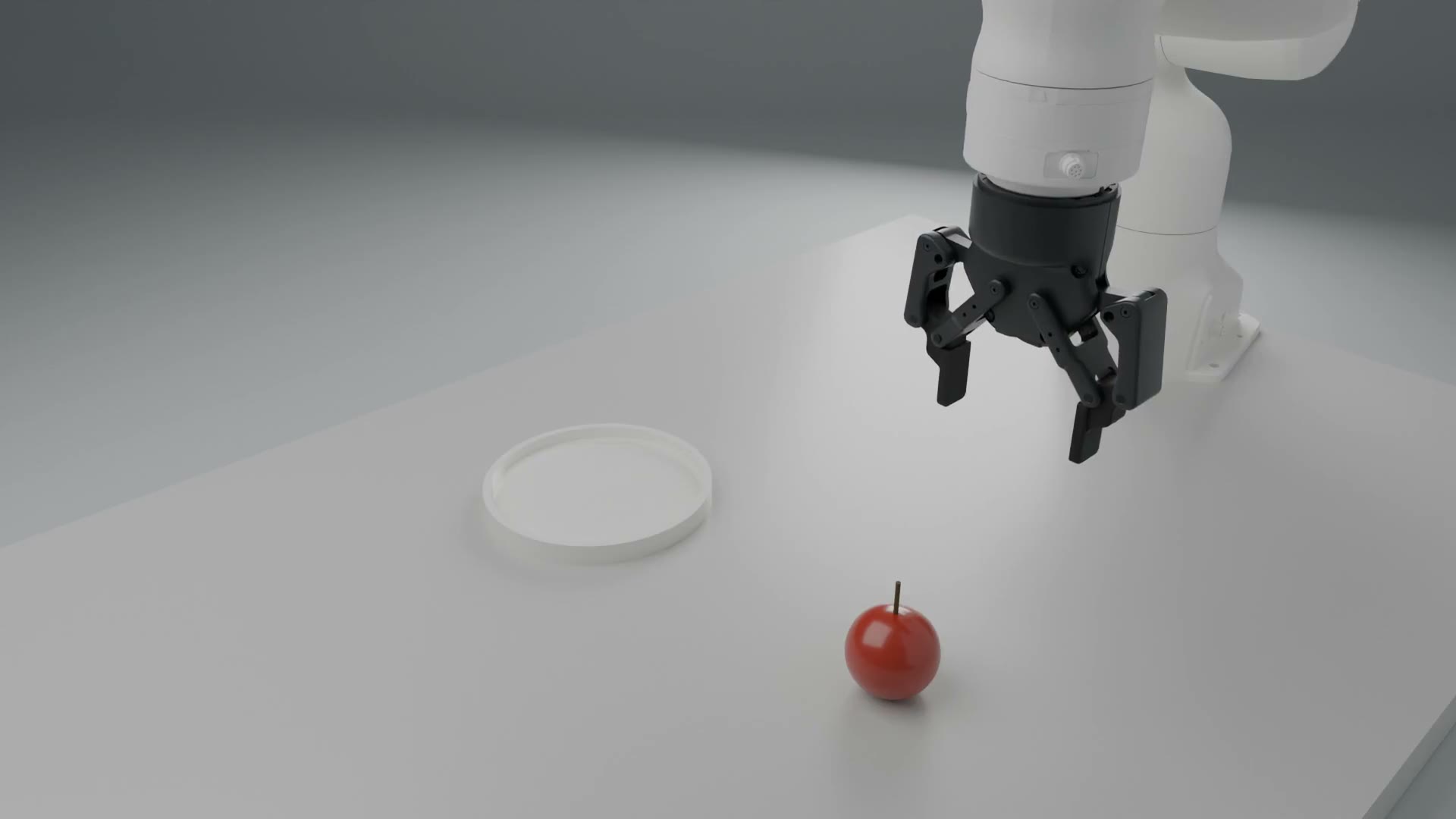
Fig. 1 Pick-and-place cellIsometric line drawing of a bench-top pick-and-place cell. An articulated robot arm stands on a bolted base, with a turret, shoulder, upper arm, elbow, forearm and wrist ending in a two-finger parallel gripper. A cable runs from the base to a small controller box with status lights. In front of the arm sit a fixture tray holding blocks and a turned peg, and a target plate with a locating fence.
Fig. 1 · Pick-and-place cell. A robot arm lifts a block from a tray and sets it on a target plate. Illustration, not an evaluation result. 12 s loop, still under reduced motion.
Flagship focus
Robotics
Planning, control and interaction.
Published evaluations
3
From RemakeBench, our benchmark.
Stated scope
Simulation
Distinct from physical execution.
Evidence
Public
Linked to each conclusion.

01Research

From generated designs to observable outcomes.

We study AI where decisions meet physical constraints. Robotics is our flagship focus, alongside the tools that design and simulate engineered systems.

01.1Flagship

Robotics

Planning, control and interaction: can an AI system turn an instruction into successful behavior?

Current published work includes simulation. Real-world execution is a separate question.

  1. APlanning
  2. BControl
  3. CInteraction
  4. SeeFig. 01, pick-and-place cell
Gear shaft assembly, explodedIllustration: a single-stage gear shaft assembly as it would be modelled in CAD, standing on a surface plate. A flanged housing with a bored barrel holds two ball bearings and a stepped, keyed shaft; a bolted bearing cover, a spur gear and a retaining screw with washer stack on top. In a slow loop the parts lift apart along the shaft axis in disassembly order, hold, and settle back together.
Fig. 2 · Exploded assembly. A gear shaft assembly comes apart in assembly order, then goes back together. Illustration, not an evaluation result. 12 s loop, still under reduced motion.
01.2

CAD & engineering

Geometry, assemblies and engineering intent: can AI produce designs that hold up beyond a convincing image?

Design artifacts and simulation are evaluated within their stated scope.

Illustration: a populated circuit board on a small test fixtureA circuit board with a lit microcontroller at its centre, a crystal, a voltage regulator, a USB connector, a pin header, a reset switch, four LEDs and rows of tiny resistors and capacitors, joined by copper traces and vias. The board sits on hex standoffs and alignment pins on a fixture plate, beside a spring probe held over a test pad. Signal pulses run from the microcontroller along traces, the LEDs light in turn and the probe lowers onto its pad and lifts again.
Fig. 3 · Circuit board on a test fixture. Signals run along copper traces from a microcontroller while a probe tests a pad. Illustration, not an evaluation result. 10 s loop, still under reduced motion.
01.3

PCB design

Circuits, components and layout: how well can AI work within the constraints of electronic design?

A generated board design is distinct from fabricated and tested hardware.

02Evidence

Evidence you can inspect.

Published evaluations from RemakeBench, our benchmark for AI building and remaking games, with work extending into physical design and simulation.

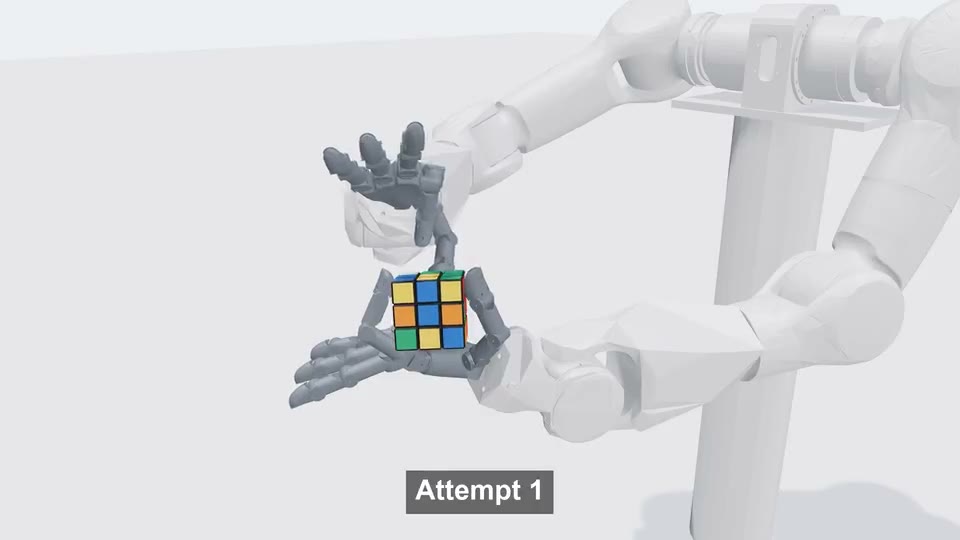
GLM 5.3 Flash cube-turn simulation capture.
Cube-turn task · GLM 5.3 Flash · Simulation capture

Model comparison

Qwen 3.8 Flash vs DeepSeek V4.1 Flash vs GLM 5.3 Flash vs Gemini 3.8 Flash

Four Flash models across game, graphics, CAD and simulated manipulation tasks. Single attempts reveal task-specific strengths and limitations.

Single attempts; campaign judgments and validated result-ledger records are distinct.

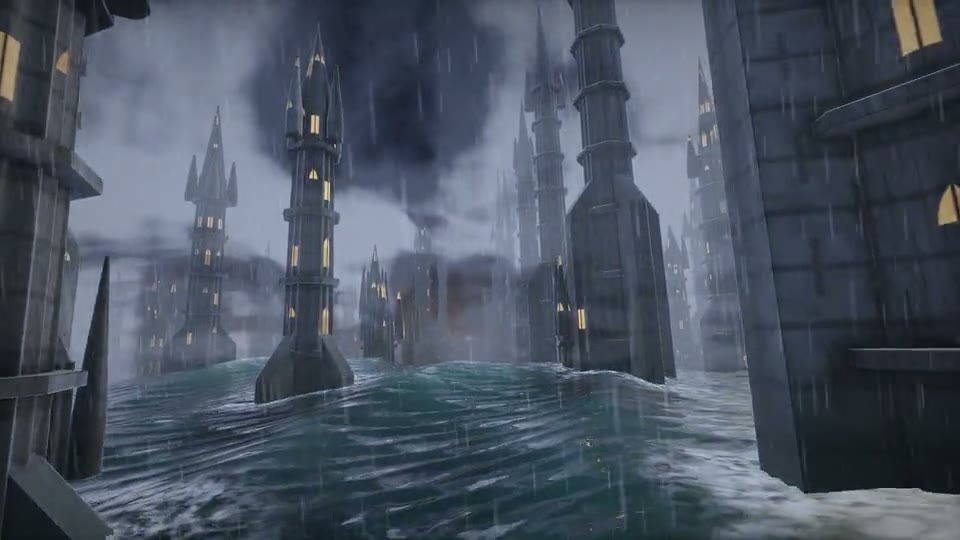
Claude Opus 5 generated storm-city scene.
Storm-city scene · Claude Opus 5 · Generated graphics

Workflow evaluation

Claude Opus 5 across nine game-building tests

Nine frozen game-building and graphics tasks, with recorded attempts, configuration disclosures and limitations.

A workflow comparison with disclosed tools. Single recorded attempts do not establish reliability.

Every result belongs to a particular task, setup and scope.

Visit RemakeBench

03Approach

Make the test clear. Make the evidence public.

Useful evaluation starts with a precise question and ends with something others can inspect. These principles guide our work.

  1. Consistent conditions

    Compare systems on the same tasks, with the same constraints and clearly stated evaluation criteria.

  2. Disclosed configurations

    Describe the model, tools, prompts and environment needed to understand what was actually tested.

  3. Observable outcomes

    Inspect the resulting artifact or behavior. Distinguish design quality, simulated performance and physical execution.

  4. Failures & public evidence

    Show the limitations alongside the successes, and link the evidence that supports each conclusion.

04Benchmarks

One company. Distinct questions.

Physical AI Analysis is the parent company. Our benchmark brands investigate specific capabilities.

AI building gamesPublished work

RemakeBench

Evaluating AI at building and remaking games.

AI playing games

GameplayBench

A benchmark brand focused on AI playing games.

05Get in touch

Better questions. Better evaluations.

Research questions, evaluation proposals or a result worth looking into.

remakebench@gmail.com